
If you see giant black-and-yellow wasps flying around your New Jersey yard, you might wonder what it is and if you have a killer wasp problem. Fortunately, the cicada killer looks more intimidating than it really is. These large, solitary wasps aren’t usually aggressive towards humans and actually play an important role in controlling native cicada populations.
Precise is here to help you understand when DIY prevention can be effective and when professional treatment is necessary.
Understanding the Cicada Killer Wasp (Sphecius speciosus)
Physical Characteristics & Appearance
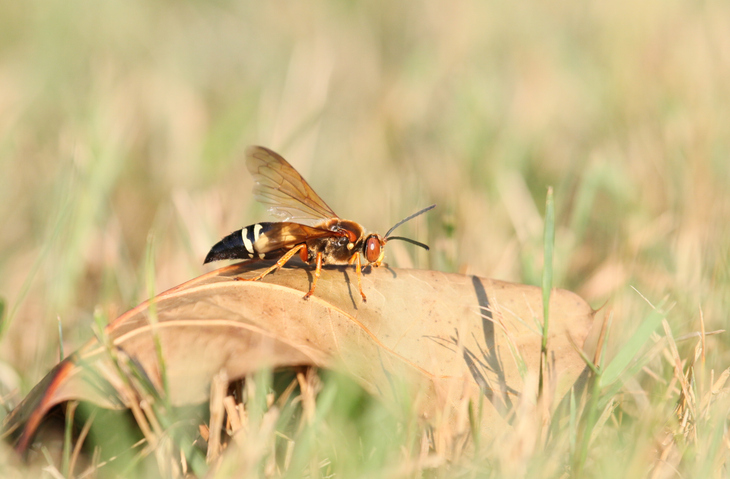
The cicada killer wasp, scientifically known as Sphecius speciosus, is one of the largest wasps we have in New Jersey. Adults can grow 1.5 to 2 inches long and have striking yellow and black abdominal markings with reddish wings. This insect also has strong, visible mandibles and large, compound eyes.
Their appearance leads to them being mistaken for Asian Giant Hornets (“murder hornets”), but they are actually an entirely different species.
Life Cycle, Seasonal Patterns & Preferred Environments
Cicada killer wasps are most active in mid to late summer, July through September where we live, to coincide with the annual cicada emergence. They are solitary rather than colony-forming insects. Females dig underground burrows in dry, loose soil and hunt cicadas, paralyzing them and carrying them back to their nests to feed their young.
Common Misconceptions & Ecological Value
Despite their intimidating appearance, a cicada killer wasp is not generally a threat to people. Male cicada killers may fly close to you while defending their territory, but they can’t sting you. Females can sting, but they naturally avoid humans unless they are stepped on or directly disturbed. Their venom is specifically designed to paralyze prey, which makes their stings surprisingly mild compared to hornets or yellowjackets.
Cicada killers are actually beneficial insects because they provide natural biological control for local cicada populations. Their burrowing helps aerate the soil, and they play a role in pollination, as adults feed on flower nectar and tree sap, thereby supporting global food systems.
DIY Management and Prevention Strategies
As a New Jersey homeowner, you can identify and monitor cicada killer nests by looking for distinctive U-shaped dirt mounds, which usually surround ½-inch to 1-inch entrance holes in turf or soil. Keep an eye out, especially during warm afternoons, for the best opportunities to spot them.
You can make your property less attractive to cicada killer wasps by maintaining thick grass or covering exposed soil with mulch or ground cover. It’s also helpful to keep bare areas moist during peak nesting season.
Evaluating Professional Treatment Options
However, professional pest control is best when cicada killer activity becomes excessive or when nests are located near areas frequented by people or pets. Heavy burrowing also attracts skunks, which can dig up lawns and cause unwanted smells.
Although cicada killer wasps rarely pose safety concerns for humans, professional help from Precise can help you have peace of mind if you have household members with severe insect allergies or inquisitive pets.
Why Homeowners Choose Precise Pest Control
At Precise, we use Integrated Pest Management (IPM) techniques to minimize the use of chemicals and help you live pest-free year-round. We have a comprehensive understanding of New Jersey insect behavior and provide straightforward, honest assessments to treat only what you truly need at an affordable price.
It’s also definitely worth contacting us if you are unsure what type of wasp or hornet you’re dealing with.
Cicada Killer FAQs
Do cicada killers sting humans?
Female cicada killers can sting, but they are generally non-aggressive and rarely sting unless directly threatened. Males do not sting.
Are cicada killers aggressive?
No, males may buzz around people and appear aggressive while defending their territory. But males can’t sting, and females generally avoid people.
What does a cicada killer do?
Female cicada killers hunt cicadas, paralyze them, and place them in underground nests to provide food for their young.
Why are they called killer wasps?
These insects are called killer wasps because the females kill or paralyze cicadas to feed their offspring. However, the name does not mean they are aggressive toward humans.
Don’t Let Giant Wasps Take Over Your Lawn: Contact Us Today
Cicada killers may sound or look frightening, but they are really more of a nuisance than a danger. But if their nesting habits are becoming overwhelming or are occurring near areas you commonly use, please contact us for a free inspection and professional recommendation.